


2026 Chevrolet Colorado vs. Ford Ranger for Kentucky Drivers
When comparing the 2026 Ford Ranger vs. the Chevrolet Colorado, you’ll see each prioritizes different features. Both give you what’s needed for weekend trips to Daniel Boone National Forest or everyday work tasks. The Colorado packs more torque and higher towing figures, while the Ranger answers with solid performance stats that make picking between them anything but easy.
Engine Performance and Capability
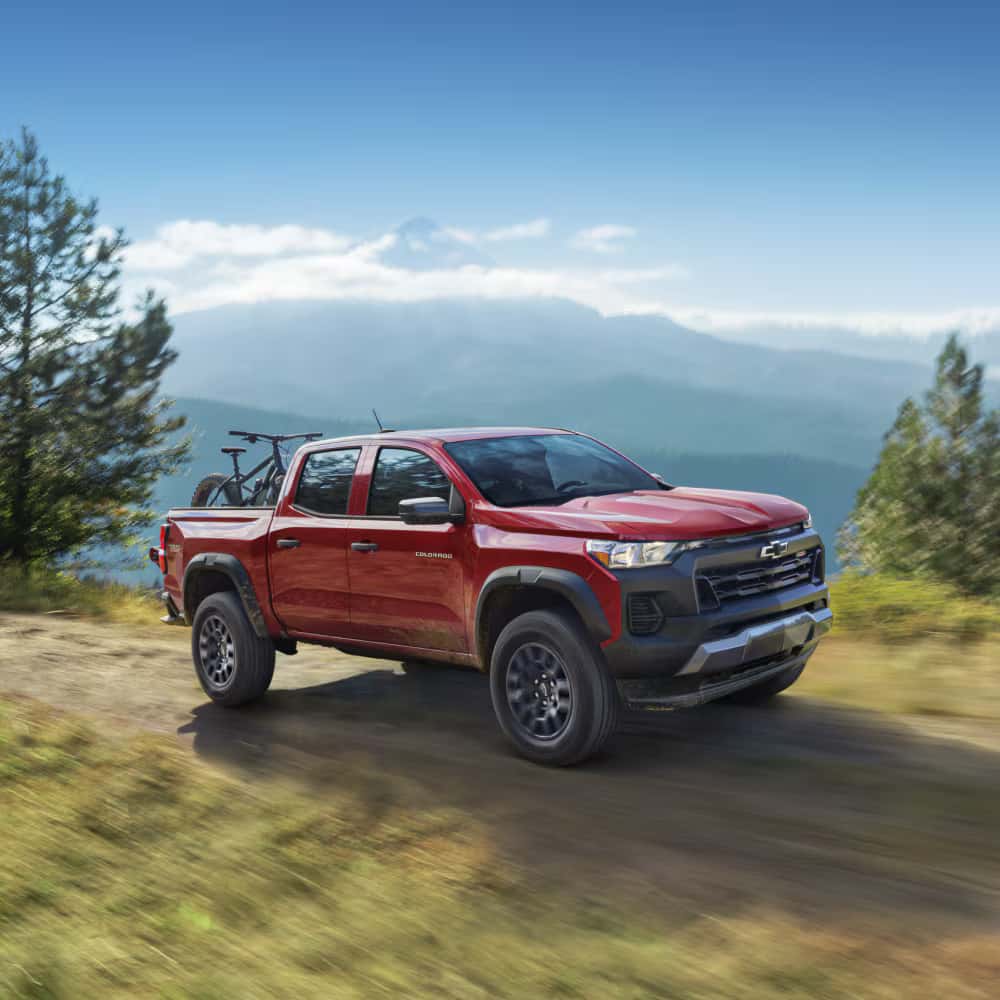
What you need power-wise dictates which truck fits your Kentucky life better. The 2026 Chevrolet Colorado offers a single engine option — a 2.7-liter TurboMax cranking out 310 horsepower and 430 lb-ft of torque. It takes a quick 6.8 seconds to reach 60 mph. This powerful engine is paired with an eight-speed transmission that handles mountain roads without fuss.
In contrast, the 2026 Ford Ranger offers varying power based on trim level. The XL, XLT, and Lariat trims come with a 2.3-liter turbo four-cylinder producing 270 horsepower and 310 lb-ft of torque. If you pick an XLT or Lariat, you can upgrade to a 2.7-liter twin-turbo V-6 with 315 horsepower and 400 lb-ft of torque. This gives you room to match engine strength to what you can spend and what you’ll actually use. All engines come standard with a 10-speed transmission.
If you’re willing to splurge, the Ford’s top-tier Ranger Raptor uses a 3.0-liter turbocharged V-6 that puts out 405 horsepower and the same 430 lb-ft of torque as the Colorado, hitting 60 mph in just 5.6 seconds. Whether you’re driving around Richmond or merging onto I-75, both trucks pack plenty of power.
Towing and Payload Capacity
The 2026 Chevrolet Colorado leads with a max towing capacity of 7,700 pounds on standard models compared to the Ranger’s 7,500-pound max. This is plenty for most boat trailers and work gear you’d haul around Kentucky.
The off-road models trade some towing ability for trail prowess, with the Colorado’s ZR2 towing dropping to 6,000 pounds. Similarly, the Ranger Raptor capacity is reduced to 5,510 pounds, trading max towing for a better suspension and improved ground clearance.
Payload varies between models. Ford’s Ranger can carry up to 1,788 pounds, while the Raptor version drops to 1,411 pounds. The Chevrolet Colorado can handle a payload of up to 2,046 pounds, which is perfect for transporting typical building supplies, camping gear, and recreational equipment.
Interior and Exterior Dimensions
Both trucks use crew-cab setups that comfortably fit five people. While dimensions vary slightly by model, the 2026 Colorado is around 212.69 inches long, 74.91 inches wide, and 78.79 inches tall with a 131.36-inch wheelbase. On the other hand, every 2026 Ford Ranger is 210.6 inches long, 86.7 inches wide, and 74.4 to 75.9 inches tall.
The Chevrolet Colorado gives you 40.29 inches of front headroom and 38.28 inches in the back, with 45.17 inches of front legroom and 34.7 inches in the back. Ford’s Ranger Raptor offers 41 inches of front headroom and 38.3 inches in the back, plus 43.2 inches of front legroom and 34.6 inches of rear legroom. Each offering similar measurements, the best option depends on your preferred style.
Bed Configuration and Utility Features
While both trucks come with 5-foot beds, the 2026 Colorado‘s clever features make loading and securing cargo easier. Its tailgate holds 500 pounds in mid-position and includes a built-in measuring tool for sizing lumber or checking load dimensions. With up to 17 tie-downs, you’ve got plenty of spots to strap down equipment, while the optional StowFlex tailgate adds storage spots for tools. Plus, the built-in 120-volt outlet and bed lighting help when working late or powering tools on site.
The Ford Ranger also offers 120-volt outlets in the bed and an available side box step for easier access, making it practical for both work and play around Richmond.
Your specific hauling needs will help you decide which works better, but both handle typical loads such as mulch, gravel, camping gear, and recreational stuff without trouble. The 2026 Colorado‘s extra tie-downs and smart tailgate functions give weekend warriors and contractors an edge.
Reliability and Value
What you’ll spend long term matters as much as sticker price. J.D. Power placed the Chevrolet Colorado second in vehicle appeal and third in vehicle dependability, ranking Chevy higher than Ford in initial quality and reliability among midsize pickups. This suggests fewer warranty trips and happier owners down the road. The Colorado also typically costs less to fix, thanks to a simpler engine design than the Ranger — a real money-saver over the years of ownership. Both include a three-year/36,000-mile limited warranty and five-year/60,000-mile powertrain coverage. That powertrain coverage means less worry about big-ticket mechanical failures.
Gas mileage affects total costs, too. The 2026 Colorado gets the same EPA-estimated ratings as the previous year at 16-19 mpg city and 16-23 mpg highway. As for the Ford Ranger, it should also get similar ratings to the 2025 version at 19-21 mpg city and 23-26 mpg highway.
Find Your Perfect Midsize Truck at Jack Burford Chevrolet
The 2026 Chevrolet Colorado’s better towing capacity, higher torque, clever bed features, and better reliability scores make it an attractive option for contractors, small business owners, and families needing maximum utility from a midsize truck. Ford’s Ranger fights back with proven performance and more engine choices that let you match power to your needs and budget.
Your specific lifestyle will tell you which truck works better, but driving both makes the choice clearer. Drop by our Chevy dealership near Lexington to test-drive the 2026 Colorado and chat with our team about financing options. We’ll help you find your perfect midsize truck.
Image courtesy of Chevrolet

0 comment(s) so far on 2026 Chevrolet Colorado vs. Ford Ranger for Kentucky Drivers