


Benefits of a Brake Health Check
 Your brakes don’t send an email when they’re wearing out. They squeal, grind, pull, or just quietly lose stopping power until you notice something feels off. That’s why a brake inspection matters so much, and why we treat it as one of the most valuable services we offer at Jack Burford Chevrolet. Below, we walk through what the inspection covers, the real benefits of staying on top of it, and how to know when it’s time to schedule a brake inspection.
What Is a Brake Health Check?
A brake health check is a hands-on evaluation of every major component in your braking system. The pads, rotors, calipers, brake lines, and fluid all get looked at, measured, and tested. Think of it as a diagnostic look under the hood, and under the car, meant to catch problems while they’re still small and cheap to fix.
What Happens During the Inspection
Our factory-trained technicians pull each wheel and measure pad thickness directly rather than guessing from a glance. They check rotor surfaces for grooves, warping, or uneven wear, and test caliper function to make sure pistons move freely and clamp evenly. The whole system gets checked as a unit, not just the parts you can see from the driveway. A sticking caliper can wear out a perfectly good pad in a matter of months.
Brake Fluid and Performance Testing
Brake fluid does a lot of quiet work, and it degrades over time as it absorbs moisture. Most manufacturers suggest replacing it every two to three years or every 30,000 to 45,000 miles, though checking your owner’s manual for specifics is always a good idea. If the fluid looks dark or contaminated, we’ll flag it for replacement regardless of mileage. Discolored fluid can mean reduced braking performance even if everything else checks out fine.
Key Benefits of Regular Brake Inspections
Routine brake inspections do more than keep you legal and safe. They protect your wallet and, down the line, your vehicle’s resale value too.
Catch Worn Pads and Discs Early
Worn brake pads don’t fail all at once. Chevrolet-engineered wear indicators are designed to create a noticeable noise once roughly 2mm of pad material remains, your cue that replacement is due. Rotors also carry a minimum-thickness specification, typically 2 to 3mm less than new, and they need to be replaced before hitting that mark rather than resurfaced below spec. Catching these markers early during a routine check keeps the whole system working as intended.
Save Money by Avoiding Costly Repairs
A small issue turns into an expensive one fast. Once pads wear past their limit, the metal backing plate starts grinding directly into the rotor, cutting grooves into a surface that used to be smooth. What could have been a simple pad swap becomes a pad-and-rotor job, or worse, a caliper replacement. Brake pad and rotor replacement can cost several hundred to over a thousand dollars per axle, depending on the vehicle and parts used. An inspection costs a fraction of that, making it one of the better values in routine vehicle maintenance.
Boost Fuel Efficiency and Driving Performance
Dragging brakes don’t just wear out faster, they cost you at the pump too. Industry testing has found that dragging brakes can noticeably reduce fuel efficiency. Either way, a properly functioning brake system gives you less resistance and smoother stops, and it lets the vehicle respond the way Chevrolet engineered it to.
Protect Your Safety on the Road
NHTSA crash data linked to faulty vehicle parts shows that about 22% of those crashes involved brake issues. Brakes deserve the same attention as any other safety system on your car, not treatment as an afterthought on the maintenance list. Regular inspections make sure the system stops the vehicle predictably and quickly when you need it most.
Preserve Your Chevy’s Resale Value
Beyond safety and repair costs, well-documented brake maintenance can help when it’s time to sell or trade in. Complete service records can add 10 to 20% to a used vehicle’s private-party value, and NADA reports that vehicles with full maintenance histories tend to see stronger trade-in offers. A folder full of brake service records tells a buyer, or a dealer, that the car was cared for.
Warning Signs You Shouldn’t Ignore
Knowing how to tell if your brakes are going bad starts with paying attention to a handful of specific symptoms:
- Whistling, chirping, or grinding sounds when you brake.
- A brake pedal that pulses or vibrates under your foot.
- The vehicle pulling to one side when you brake.
- A dashboard brake or ABS warning light.
- A burning smell after repeated or heavy braking.
- Visible fluid pooling or leaking under the car.
- Visibly thin brake pads when viewed through the wheel spokes.
The table below maps common symptoms to the general wear stage behind them, so you have a quick reference for how urgent a fix might be.
| Pad Wear Stage | Symptoms | Recommended Action | Urgency Level |
| Early wear | Occasional chirping or squealing | Schedule inspection soon | Low |
| Moderate wear | Pedal pulsation or pulling left/right | Inspect soon | Moderate |
| Advanced wear | Grinding sound, visibly thin pads | Immediate service | High |
| Severe wear/fluid issue | Burning smell, fluid leak, ABS light | Immediate service | High |
How Often You Should Schedule a Brake Check
There’s no GM-mandated mileage interval for brake inspections, since wear depends heavily on driving habits, terrain, and load. Chevrolet’s own approach is to check brakes at every Multipoint Inspection rather than lock owners into a fixed schedule. Many dealers use every 12,000 miles or once a year as a reasonable baseline for most drivers, more often if you do a lot of stop-and-go driving around Richmond or Lexington traffic, or haul heavier loads through Madison County. If it’s been a while since your last check, that’s usually a good sign it’s time.
The Real Cost of Skipping a Brake Check
Putting off a brake check doesn’t actually save you anything. It just pushes the bill further down the road, and a bigger one at that. A pad job left too long turns into a rotor job, and a rotor job left too long can mean caliper damage on top of it. A vehicle with compromised stopping power also carries real safety risk, which can translate into higher repair costs, insurance complications, or worse if a problem goes unnoticed too long. The inspection itself takes far less time and money than the repairs that follow neglect.
Brake Service Options at Jack Burford Chevrolet
Most inspections at our shop move quickly thanks to our 12-bay service area and factory-trained technicians, who work with genuine GM parts and know Chevrolet’s brake systems inside and out. We serve drivers throughout Richmond, Lexington, Winchester, Berea, and Madison County, and our comfortable customer lounge with Wi-Fi makes the wait easy if you’re staying on-site.
In-Shop Brake Health Checks Near Lexington
Our facility at 819 Eastern Byp, Richmond, KY 40475 offers full brake inspection services backed by our experienced service team. We check and document every component so you know exactly where your brakes stand.
Mobile Brake Service: We Come to You
For added convenience, our MobileService+ program sends a factory-trained technician to your home or workplace for select services, no shop visit required. It’s a good option for drivers across Madison County who want professional brake care without rearranging their day.
Schedule Your Brake Health Check Today
Book In-Shop or Mobile Service
Whether you’d rather bring your Chevy to our 12-bay shop or have a technician come to you through MobileService+, scheduling is simple. Call our service line at (859) 623-3350 with any questions or to schedule your appointment, or book your appointment online.
Visit or Reach Out
We’re open Monday through Friday, 7:30 AM to 5:30 PM. As a family-owned Chevrolet dealership serving Richmond, Lexington, Winchester, Berea, and Madison County since 1964, we’ve built our reputation on straightforward, thorough service. If you have questions before booking, get in touch and we’ll help you find the right option for your Chevy.
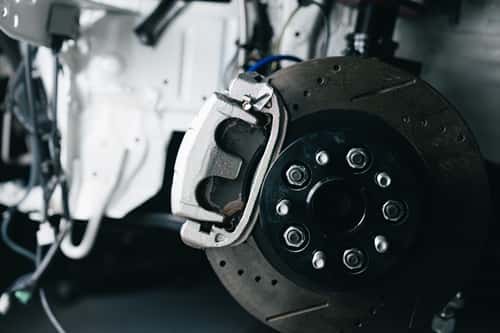
Photo of detailed view of a car’s brake caliper and disc in a workshop setting by Erik Mclean is licensed with Pexels License.

0 comment(s) so far on Benefits of a Brake Health Check